CENTCOM Commander Visits Strait of Hormuz as U.S. Forces Cite 1.5 Billion Barrels Exported Since Summer
ANALYSIS · October 25, 2026
Slug: centcom-commander-strait-of-hormuz
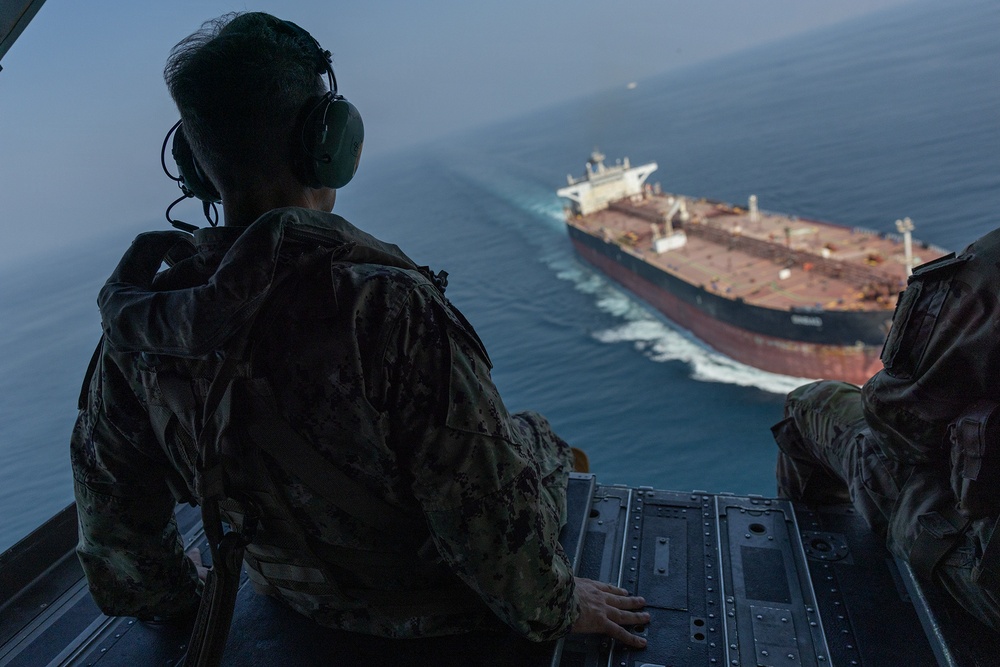
Adm. Brad Cooper, commander of U.S. Central Command, observes a commercial vessel transiting the Strait of Hormuz from a U.S. Army CH-47 Chinook, Oct. 25, 2026. U.S. Navy photo by Senior Chief Petty Officer Amanda Dunford / U.S. Central Command (public domain). Source: DVIDS.
Package note: This Analysis covers the U.S. Central Command public release of October 25, 2026. The figures below are CENTCOM’s own statements. The release does not include underlying shipping data.
Primary sources
- U.S. Central Command (October 25, 2026): https://www.centcom.mil/MEDIA/PUBLIC-RELEASES/Article/4633061/centcom-commander-visits-strait-of-hormuz-during-milestone-week/
U.S. Navy Adm. Brad Cooper, the commander of U.S. Central Command, flew over the Strait of Hormuz on October 25, 2026, aboard a U.S. Army CH-47 Chinook to observe commercial traffic. According to CENTCOM, the visit came as U.S. forces reached the milestone of helping Gulf partners export more than 1.5 billion barrels of crude oil since summer. CENTCOM said more than 3,000 commercial vessels have transited the strait with support from its forces over the last six months. During the trip, Cooper met U.S. service members who took part in the mission that cleared the strait’s international shipping lanes of sea mines that CENTCOM says were laid by Iran’s Islamic Revolutionary Guard Corps (IRGC).
Core Tension
Cooper said that “primary transit routes in the Strait of Hormuz remain free and clear of Iranian sea mines,” and CENTCOM says “over 95% of ships navigating the Strait of Hormuz have sailed through safely despite the IRGC’s unwarranted aggression.” That figure also means some ships did not pass safely, and the release gives no number or details for them. It reports cumulative totals (1.5 billion barrels since summer, 3,000 vessels in six months) but does not compare current traffic with levels before the conflict, and it does not publish the shipping data behind its figures.
The full Analysis comes with membership: what the document does, the claims check, and what to watch. Become a member or sign in. Founding members (first 100): $30 the first year, then $50/yr.